Architecture 2050: What We Should’ve Built Instead of Whatever “This” Is
If future generations ever dig up our building trends from the 2020s, they’re gonna look at us the same way we look at medieval doctors who thought a good leeching would fix your migraines. I said what I said.
Because we are out here building things that make zero sense for the world we’re actually living in.
Welcome to Architecture 2050: What We Should’ve Built Instead of Whatever This Is.
1. The McMansion Era Will Age Like Milk
In 2045, the electric grid will be held together with duct tape and a prayer. We’re already kicking ourselves for suspending them in plain site; an eyesore of spaghetti dangling like Christmas lights in a frat house. A simple reminder that we solve problems the fastest and cheapest way humanly possible, regardless of the fact a single storm can take out a whole neighborhood’s electricity in 45 seconds flat.
Meanwhile, we’re still out here designing 6,000 sq ft homes like energy is free and public utilities didn’t slowly become '‘luxury subscriptions.’
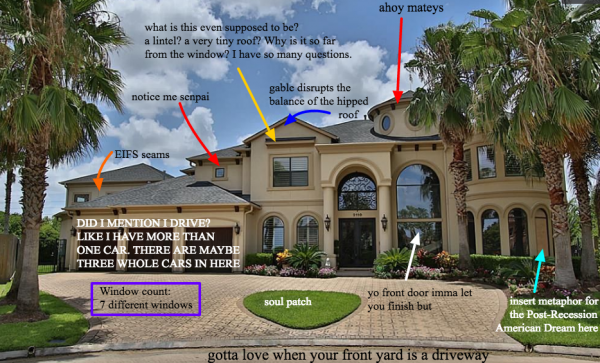
Future generations are gonna look at our oversized, under-insulated houses and go: “Oh wow… they really built a giant greenhouse and then acted shocked when it got hot.”
We’re out here drawing rectangles that spend all day fist-fighting the sun, and then pretending the PSE&G bill isn’t creeping up behind us with a baseball bat.
If your house needs the output of a small power plant just to keep it at 72°F, I’m judging — and so too will everyone in 2050.
Future generations are gonna look at our oversized, under-insulated houses and go: “Oh wow… they really built a giant greenhouse and then acted shocked when it got hot.” We’re out here drawing rectangles that spend all day fist-fighting the sun, and then pretending the PSE&G bill isn’t creeping up behind us with a baseball bat. If your house needs the output of a small power plant just to keep it at 72°F, I’m judging — and so too will everyone in 2050.
2. Car-Dependent Neighborhoods? In This Economy?
Picture it: 2050. Gas is seventeen bucks a gallon, every inventor who builds a car that runs on anything other than gas somehow “retires early to a remote undisclosed location,” chickens have become the hottest new form of currency, and we’re still designing neighborhoods where you need a car, a podcast, and a packed snack just to reach your own mailbox.
Future people are gonna scroll through the archives of our urban planning choices and say:
“So y’all really paved over half the continent… to buy milk?”
And honestly? They’d be right.
Walkability shouldn’t be a luxury. It’s how we keep kids from thinking “playing outside” means taking aesthetic photos next to a storm drain behind a Target.
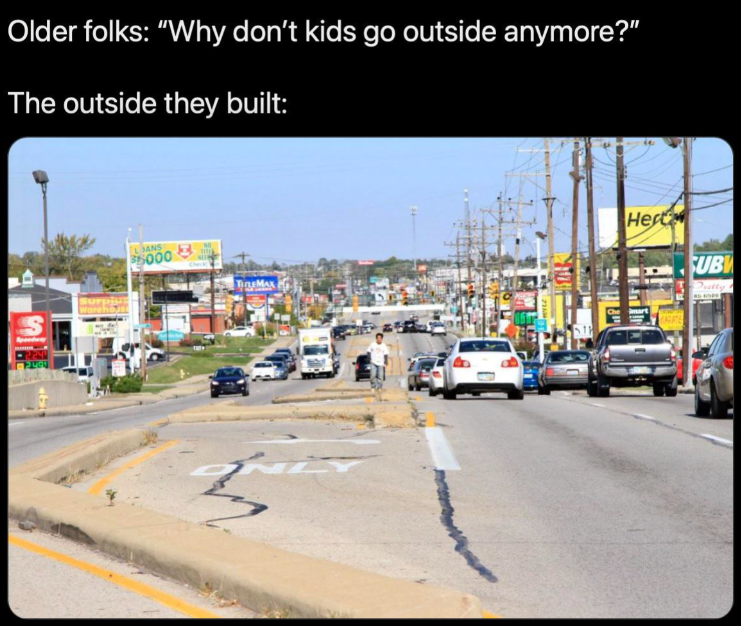
“Why don’t you play outside?”
→ Outside, as boomers built it: six lanes of traffic, two strip malls, and a gas station with a loose shingle flapping in the breeze.
We did this to ourselves, y’all.
3. Houses With Zero Flexibility: a Villain Origin Story
At some point, we all collectively decided that every room in a house must have One Sacred Purpose forever.
Dining room? Dining.
Office? Officing.
Guest room? Hosting that one cousin who visits every three years.
Why?
For what?
Who decided this?
Meanwhile, in the real world, your dining room is out here like a single mom who works two jobs, who loves her kids and never stops, pulling double duty as:
A Zoom cave that has everybody commenting on your terrible lighting
A small-business war room where bills go to suffer in obscurity
A hostage suite for visiting relatives
Absolutely anything but dining
The future is adaptable spaces — homes that grow, pivot, stretch, compress, and generally mind their own damn business instead of locking you into whatever lifestyle you had the day you signed the mortgage.
Static, single-purpose rooms?
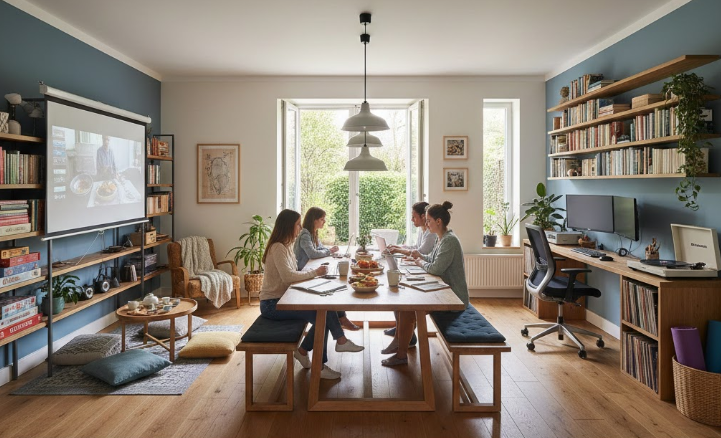
Baby, in 2050 that’s gonna feel like trying to squeeze into your high school skinny jeans:
painful, humiliating, and guaranteed to make you question your life choices.
Homes should evolve with us, not trap us in the past like we’re living in a time capsule labeled “2005 Forever.”
4. Buildings That Ignore Climate: Bold of Us
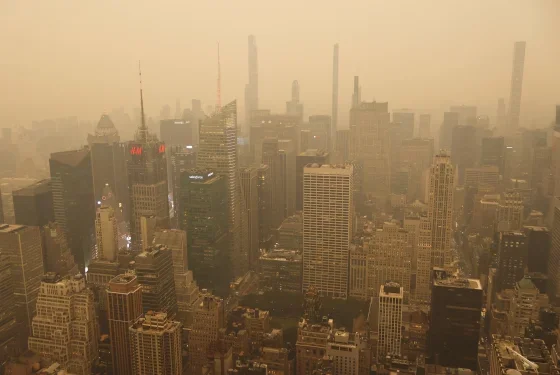
Architects in the 2020s:
“Should the building face the sun?”
Developers:
“No. The sun needs to face the building.”
The future is gonna roast us for:
Black roofs in desert climates
Floor-to-ceiling glass with zero overhang in Florida (???)
Windows on the wrong side of the house
Landscaping that dies if you breathe on it wrong
Concrete everything for no reason
Climate-responsive design is not “innovative.”
It’s literally… common sense.
5. We Should’ve Been Building for Community — Not Isolation
In 2050, the coolest thing you can have isn’t a movie room.
It’s neighbors you actually know.
But we’ve spent decades designing houses like bunkers — giant garages, back decks nobody uses, and yards fenced like the Hunger Games.
Imagine instead:
Shared green spaces
Communal workshops
Pop-up markets
Play areas that won’t set off The Perfect Neighbor
Buildings that invite interaction instead of avoiding it
The architecture of the future isn’t just sustainable — it’s social.
So What Should We Build Instead?
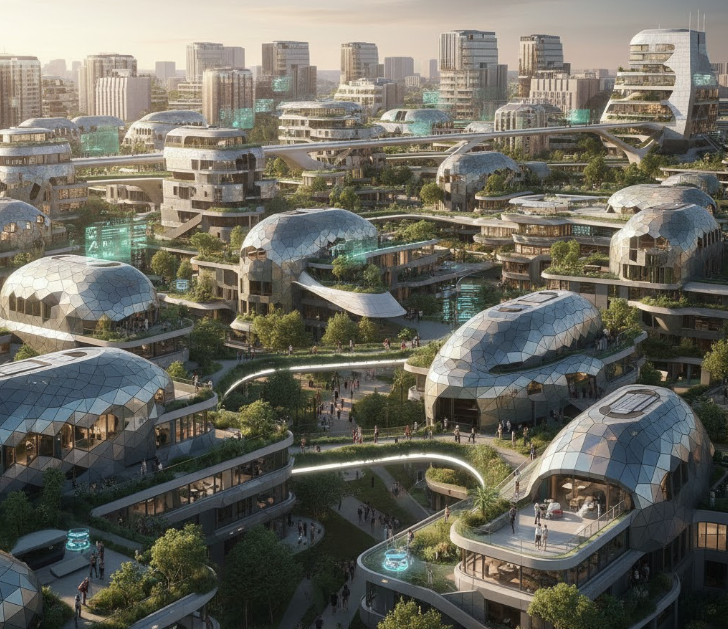
Buildings that:
Adapt
Insulate
Shrink smartly
Connect people
Reduce energy drag
Fit on infill lots
Don’t fight the climate
Don’t need a full-time facilities manager named Randy to stay alive
The future isn’t minimalist.
It’s intentional.
It’s not “futuristic.”
It’s responsive.
It’s not “high-tech.”
It’s smart where it matters and humble everywhere else.
And honestly?
It’s gonna age a lot better than the stuff going up right now.
